
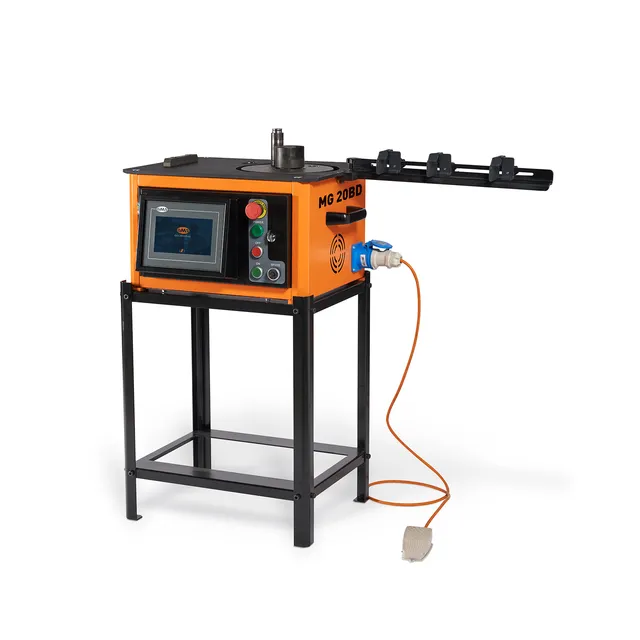
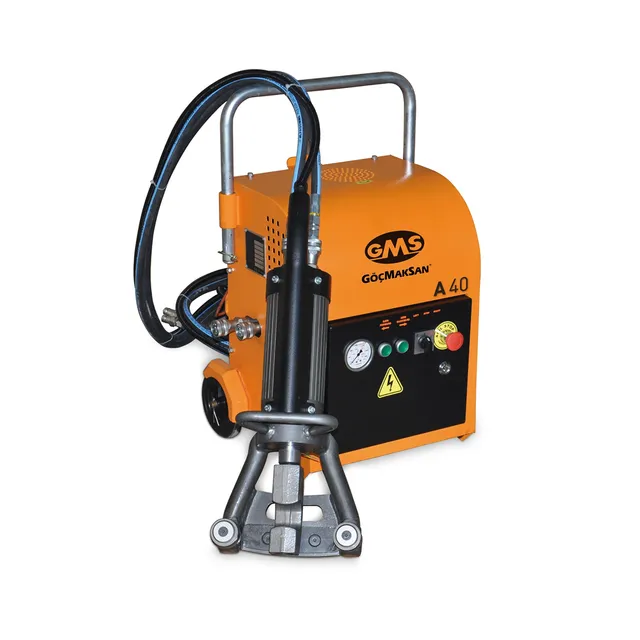
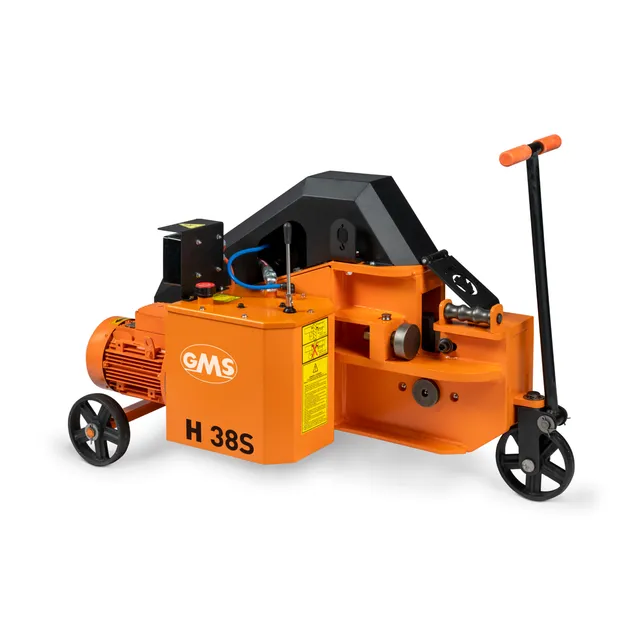
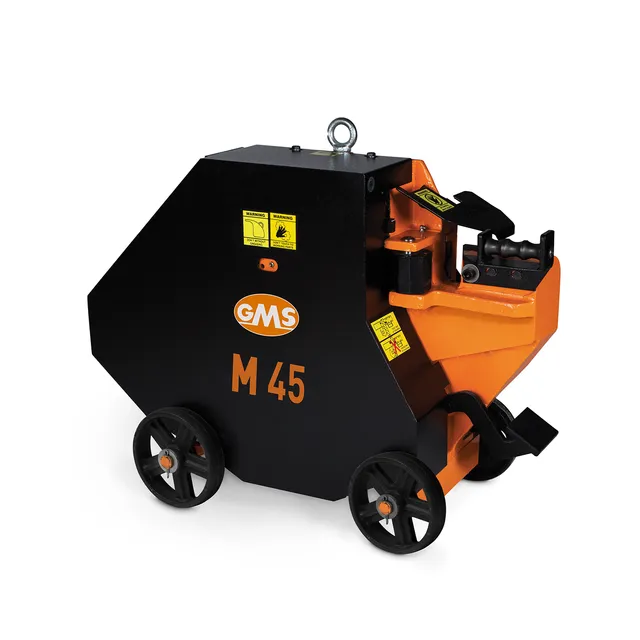
Rebar Cutting Machines: Which Type Fits Your Operation?
Clean, burr free cutting of reinforcement steel is the foundation of every downstream process. A crooked cut costs time at the bender, wears out tooling and in the worst case compromises the dimensional accuracy of the reinforcement. Here is an overview of the machine types and where each one belongs.
Electromechanical cutting machines
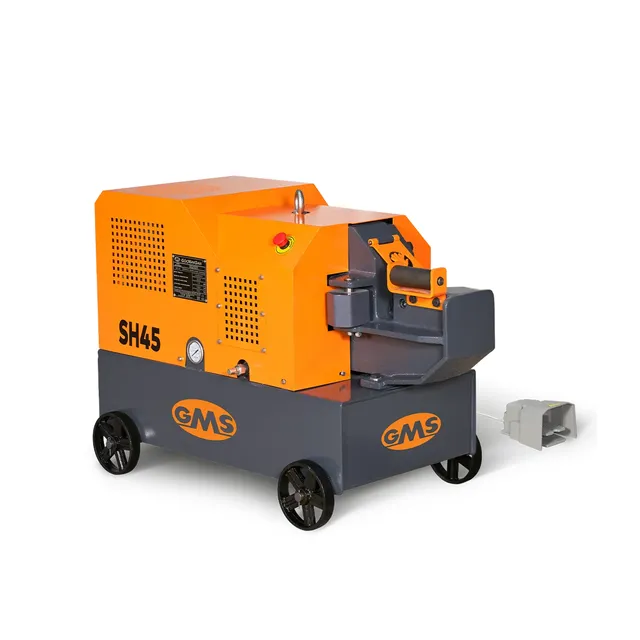
The workhorse for job sites and workshops. An electric motor drives the blade through a gearbox and the cut happens in a fraction of a second. Typical capacities reach 45 mm or 55 mm bar diameter. Strengths: high cutting speed, simple operation, low maintenance. For most contractors and mid sized rebar shops, this is the most economical solution.
Hydraulic cutting machines
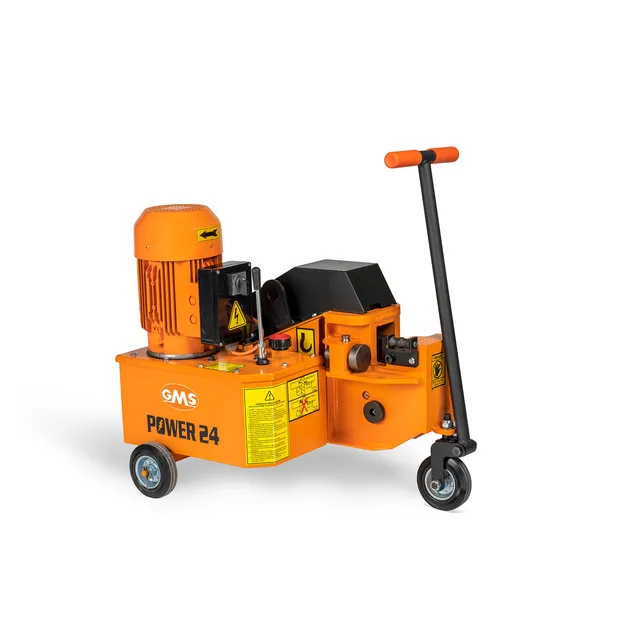
When large diameters or high tensile steel are on the daily menu, hydraulics show their strength. The cut is slower but almost vibration free and extremely controlled. Ideal for heavy single cuts and special applications.
Automatic shearlines for rebar processing plants
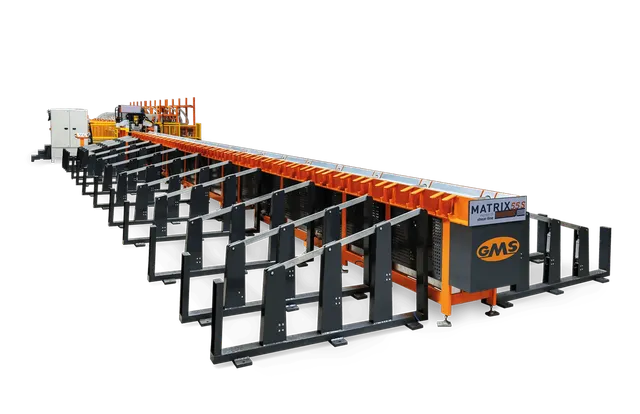
Above a certain volume, the step to an automated shearline pays off: bars are fed from stock, measured to length and cut in cycle. Systems like our MATRIX 55S shearline process entire bar bundles and drastically reduce labour per tonne. For rebar fabricators in growing markets such as Poland, Romania or Albania, this is the logical next step.
Selection criteria at a glance
Check four points: maximum diameter with reserve, real world cuts per hour, blade life and replacement blade cost, and CE compliant safety equipment. One often overlooked point is cut quality on bundles. Cutting several bars at once saves massive time but requires a machine with genuine capacity reserve.
Conclusion
Electromechanical for speed and daily work, hydraulic for force, shearline for volume. GMS Germany manufactures all three classes and will advise you honestly on the right size. Browse all models under rebar cutting machines.
FAQ
How many cuts per hour can a rebar cutting machine achieve? Electromechanical machines achieve several hundred cuts per hour depending on diameter. With bundle cutting, output per bar multiplies accordingly.
How often do blades need replacing? It depends on steel grade and workload. Quality blades have multiple cutting edges and can be rotated before replacement. Regular inspection prevents loss of cut quality.
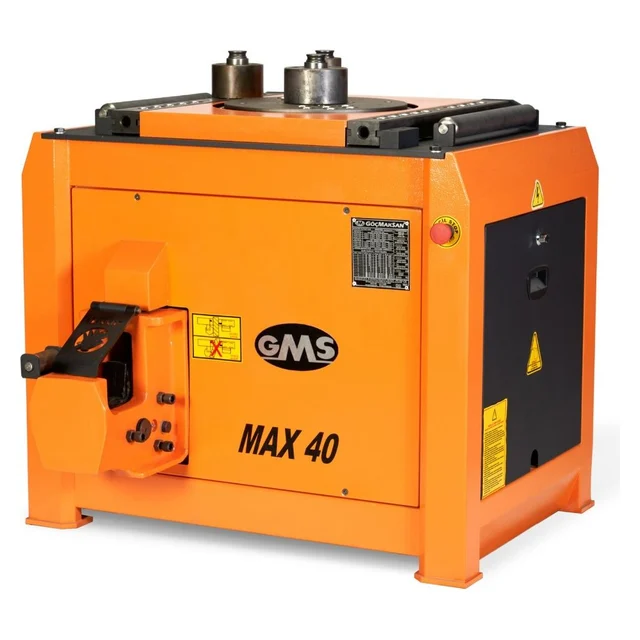
Is a combined cutting and bending machine worth it? For small job sites, yes. As soon as both processes need to run in parallel, separate machines are more productive.